
The Pink City which captured our hearts
[ad_1]
After attending a friend’s wedding in Jaipur recently, we decided to explore the city. Jaipur, India’s first planned city, was founded in 1727 by the Kachwaha Rajput ruler Maharaja Sawai Jai Singh II, who shifted his capital from Amber. Known worldwide as the “Pink City,” Jaipur is distinguished by its terracotta-coloured buildings, majestic palaces, and timeless charm. A harmonious blend of heritage and modernity, it stands today as the capital of Rajasthan and a renowned World Heritage Site.
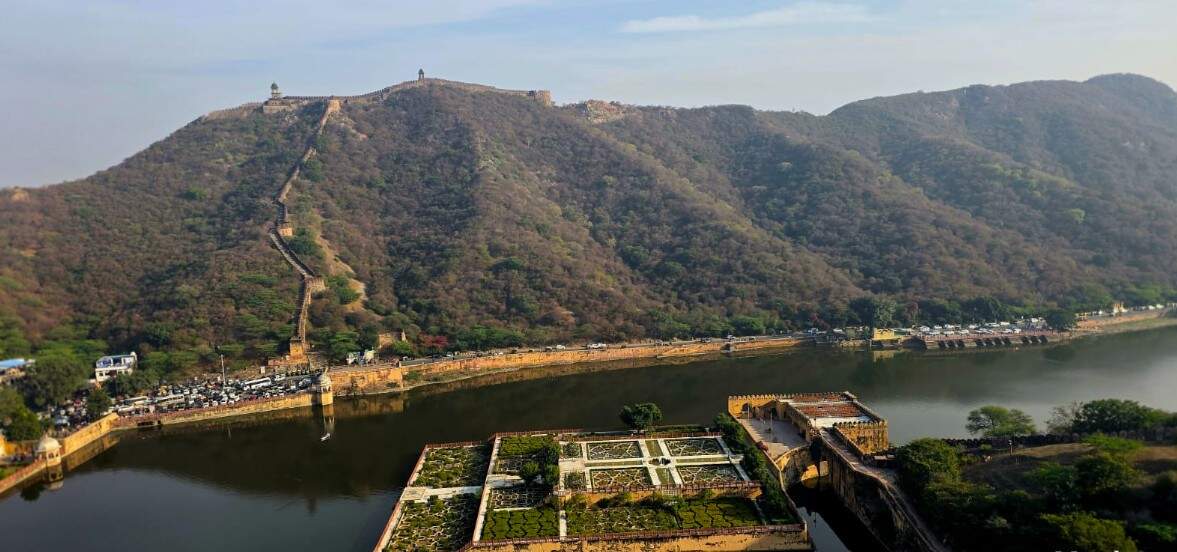

Maharaja Jai Singh II placed great emphasis on the city’s security due to growing foreign threats in northern India. A keen scholar of mathematics and science, he sought the expertise of Vidyadhar Bhattacharya, a Brahmin architect and scholar from Bengal, to design the city. Vidyadhar referred to ancient Indian astronomy texts, along with the works of Ptolemy and Euclid, and developed the city’s layout in close consultation with the king.
It took nearly four years to complete the city’s principal palaces, main roads, and central squares. Jaipur was designed in accordance with the principles of Vastu Shastra. The city was divided into nine blocks, two earmarked for state buildings and palaces, while the remaining seven were allocated to the public. For security, massive fortification walls and seven strong gateways were constructed. In 1876, the entire city was painted pink to welcome the Prince of Wales, after which Jaipur became famously known as the “Pink City,” enhancing its magical and regal aura.
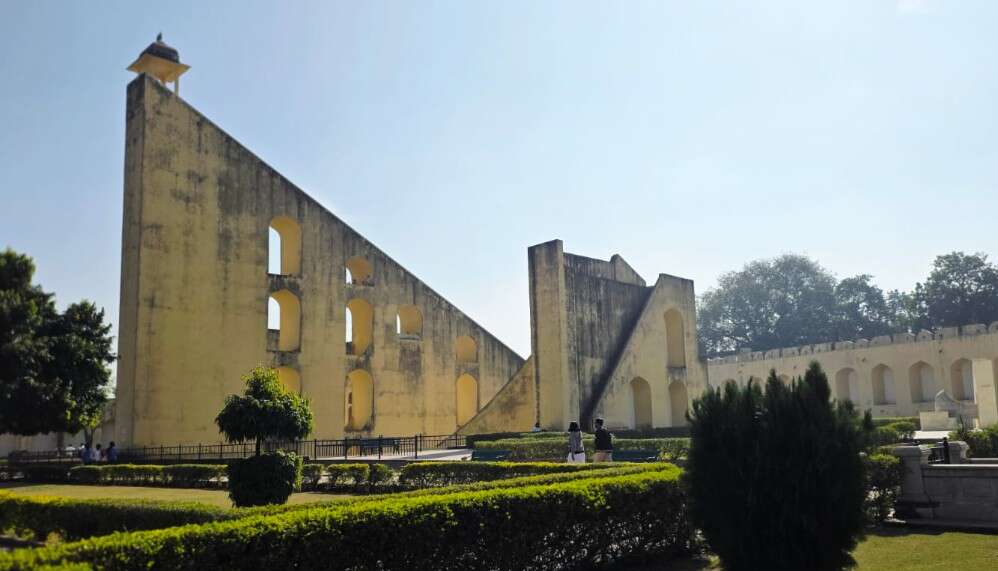

Our sightseeing began with Jantar Mantar, an extraordinary observatory built by Maharaja Jai Singh in 1734. This complex of 19 astronomical instruments houses the world’s largest stone sundial and is a UNESCO World Heritage Site. The instruments allow celestial observations with the naked eye and reflect the Ptolemaic system of positional astronomy. Jantar Mantar incorporates instruments functioning across the three principal classical celestial coordinate systems: the horizon-zenith local system, the equatorial system, and the ecliptic system. The Kanmala Yantraprakara uniquely operates in two systems and enables direct transformation of coordinates from one system to the other.

I was amazed by the precision of the instruments, the accuracy with which they indicated time, months, seasons, zodiac signs based on birth dates, and even birth chart calculations.
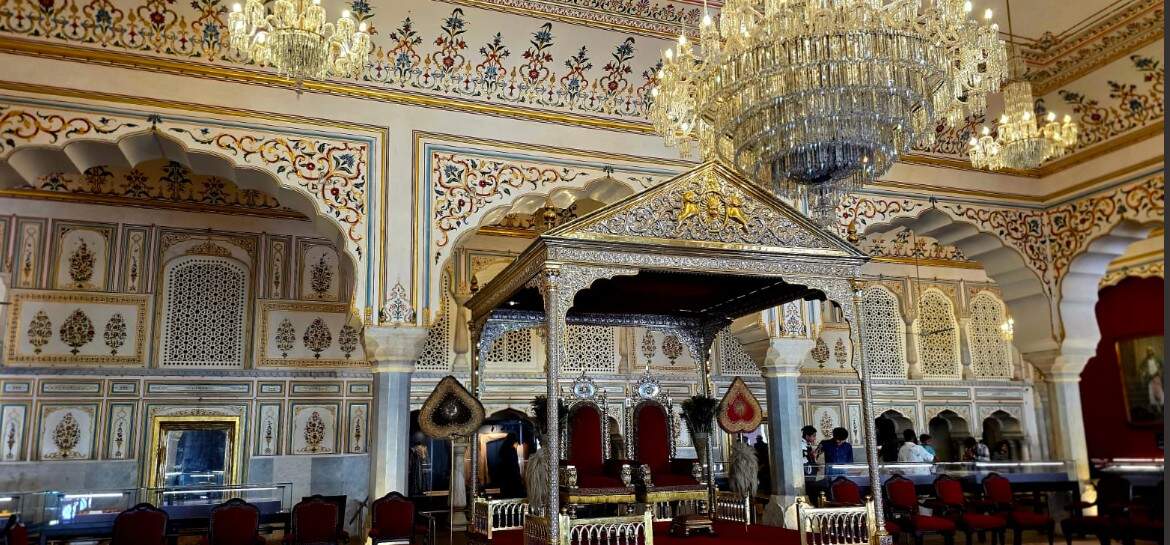
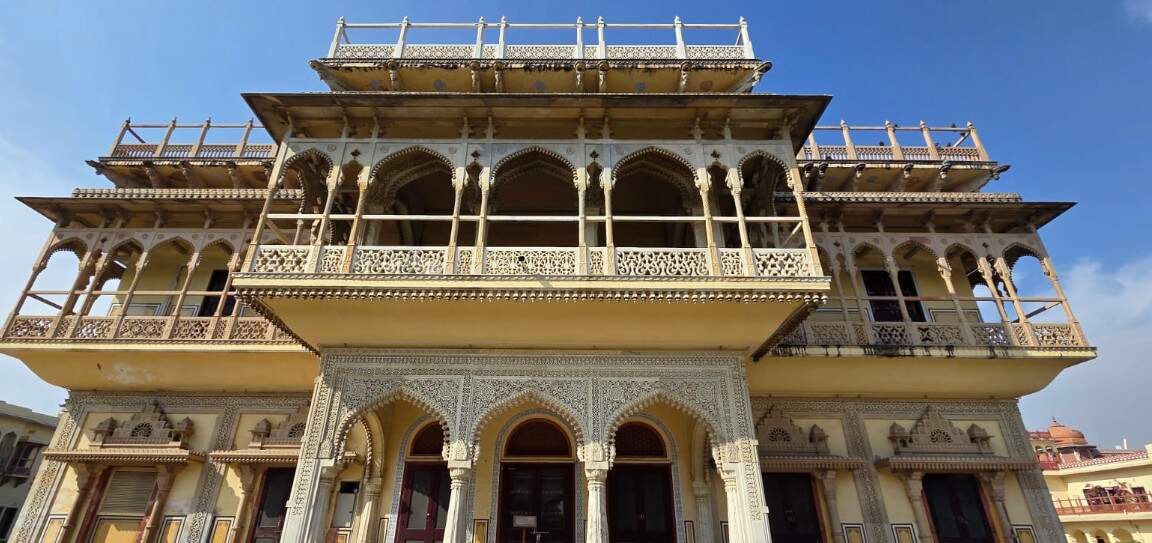
Directly across the road lies the Jaipur City Palace, the royal residence and former administrative headquarters of the Jaipur rulers. Its construction began in 1732 under Maharaja Sawai Jai Singh II in an architectural style combining both Mughal and Rajput influences. Today, the palace houses the Maharaja Sawai Man Singh II museum and includes several buildings, courtyards, galleries, restaurants, and administrative sections.
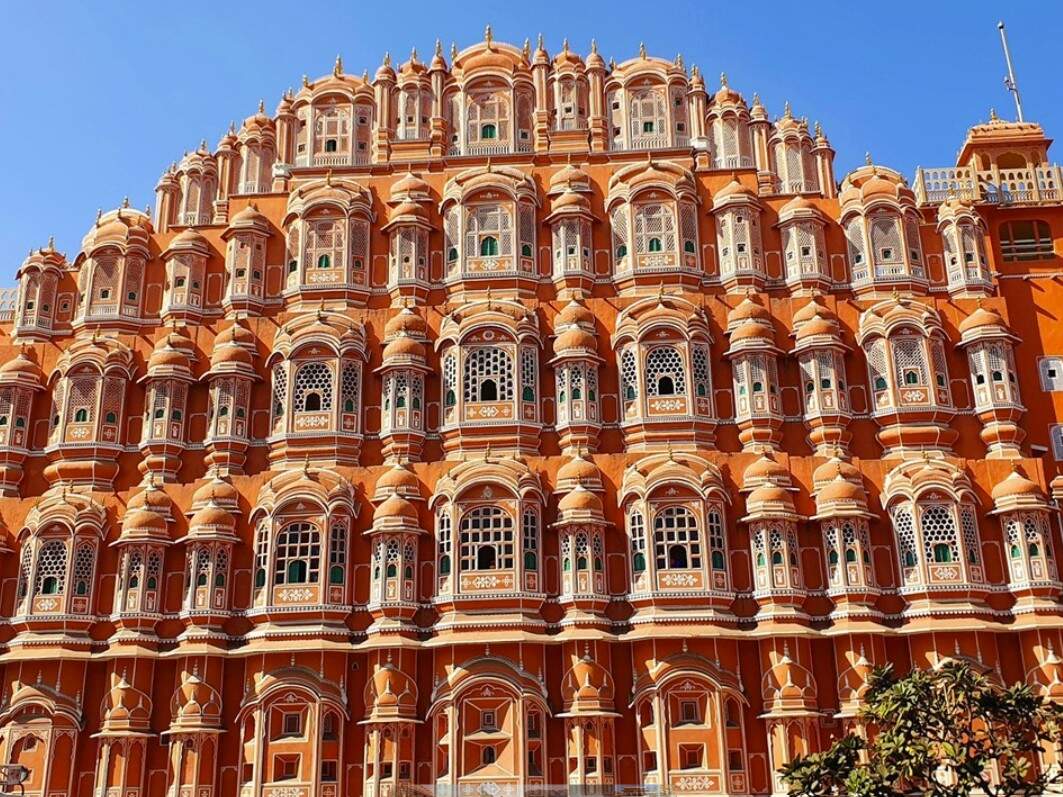

Nearby stands the iconic Hawa Mahal, the “Palace of Winds,” built in 1799 by Maharaja Sawai Pratap Singh using red and pink sandstone. Its façade features 953 small charkha-style windows arranged like a honeycomb. These windows allowed royal women to observe everyday street life while remaining unseen, and were ingeniously designed to provide natural ventilation. Due to this Venturi effect, cool air circulated through the palace, making it pleasantly breezy even during the intense summer heat.
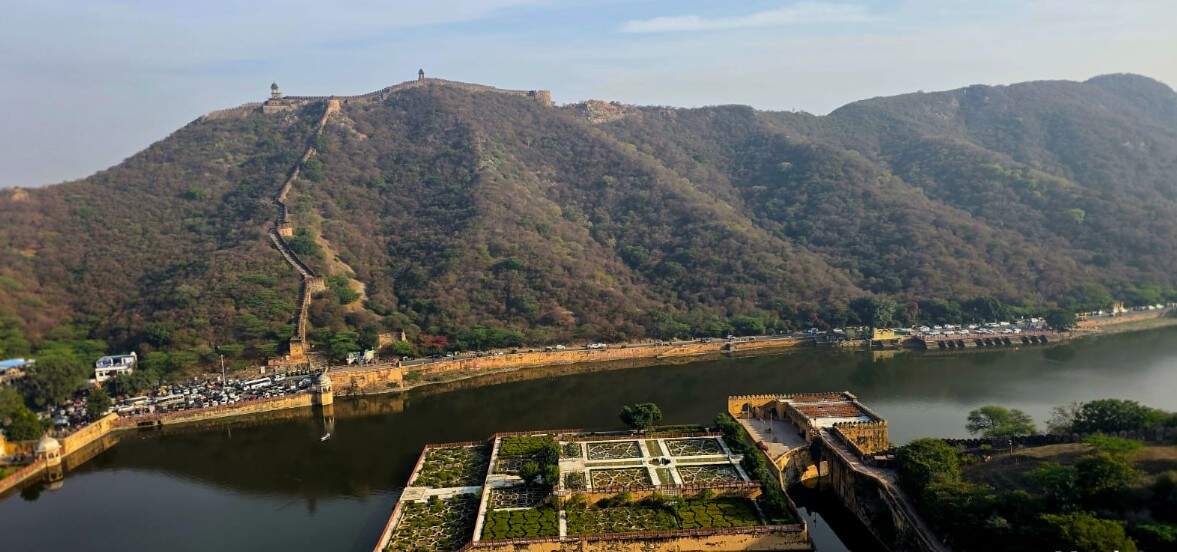
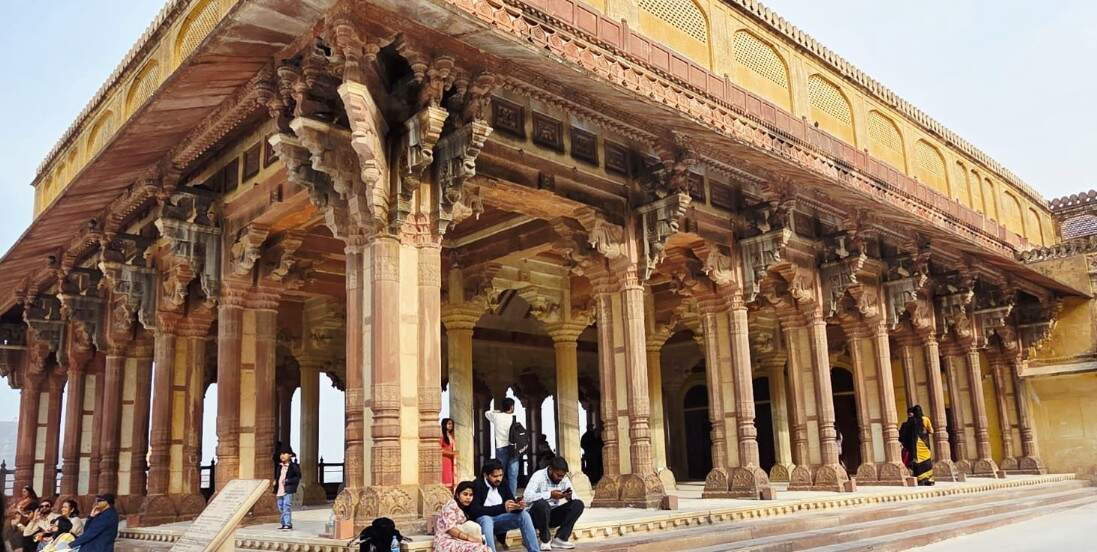
Our next stop was the Amer (Amber) Fort, a UNESCO World Heritage Site situated 11 kilometres from Jaipur. Perched high on a hill, the fort is renowned for its artistic beauty and Rajput architecture influenced by Mughal design. Overlooking the Maota Lake, the primary water source for the palace, Amer Fort is built from red sandstone and marble and laid out across four levels, each featuring a courtyard. Its most notable parts include the Diwan-e-Aam (Hall of Public Audience), Diwan-e-Khas (Hall of Private Audience), the Sheesh Mahal or Jai Mandir (Mirror Palace), and the Sukh Niwas, where an artificially cooled environment is created by wind blowing over a water cascade. This is why Amer Fort is also referred to as Amer Palace.

Near the Ganesh Gate stands the temple dedicated to Shila Devi, a goddess of the Chaitanya sect. The idol was gifted to Raja Man Singh after he defeated the Raja of Jessore in Bengal in 1604. Raja Man Singh had twelve queens, for whom he built twelve separate chambers. Raja Jai Singh, with only one queen, constructed a single large chamber equal in size to the earlier twelve combined.
Amer Fort and Jaigarh Fort together form a unified defensive complex on the Aravalli range. A subterranean tunnel connects the two, serving as an escape route for the royal family and others during wartime, allowing them to move safely from Amer Fort to the more secure Jaigarh Fort.

Enchanted by Amer’s architectural brilliance, we continued to Nahargarh Fort, meaning “Abode of Tigers.” Situated on the edge of the Aravalli hills, it offers a commanding view of Jaipur. Along with Amer and Jaigarh forts, Nahargarh once formed a formidable defensive ring around the city. According to popular belief, the fort’s construction was initially obstructed by the spirit of Nahar Singh Bhomia. To appease him, a temple was built in his honour within the fort, after which the construction progressed smoothly. Nahargarh contains nine identical quarters built for the king’s nine queens.
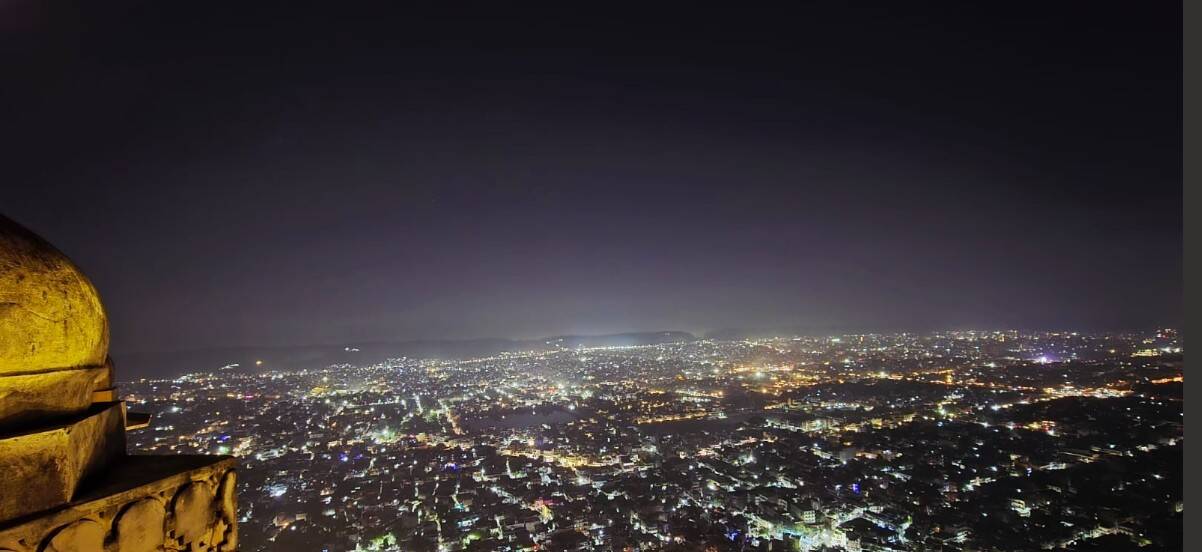

Along the ramparts of the fort lies the Padao Restaurant, operated by Rajasthan Tourism. It is famous for its breathtaking sunset views. We enjoyed a delicious dinner here, accompanied by a mesmerising panoramic night view of Jaipur and soothing traditional Rajasthani folk music.
On our way back, we drove past the tranquil Man Sagar Lake and paused to admire the illuminated Jal Mahal, the enchanting “Water Palace” situated in the middle of the lake.
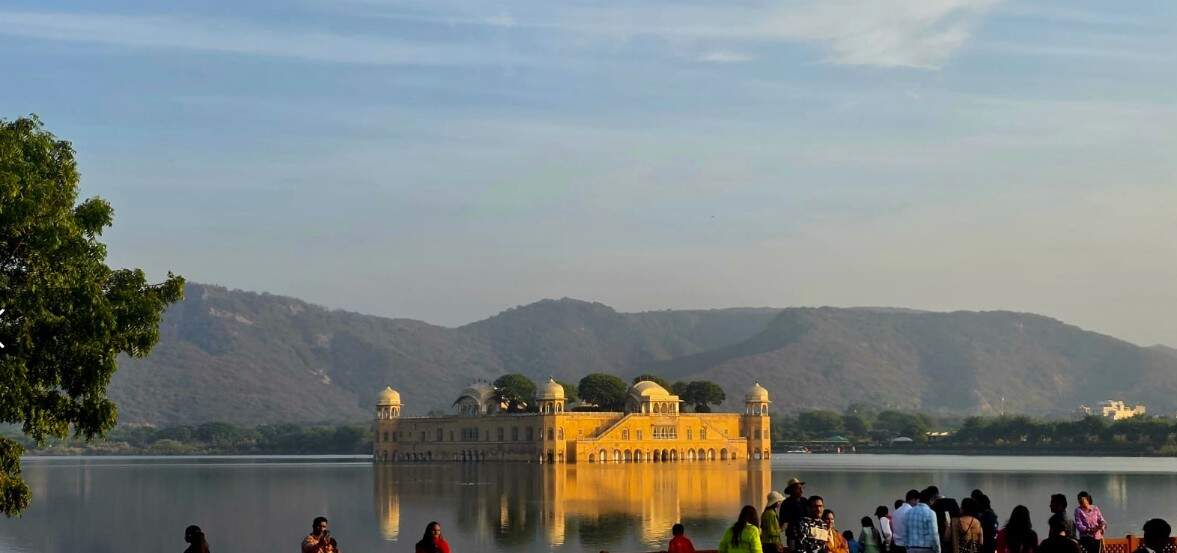

Jaipur felt like a dream, an unforgettable tapestry woven with palaces that whispered stories of courage, forts that echoed with the pride of the Rajputs, and architectural marvels that revealed the brilliance of ancient India. The elegance of its buildings, the devotion carved in its temples, the intelligence embedded in its observatory, and the sheer grandeur of its heritage wrapped my heart in awe. As we drove away that night, with the shimmering reflection of the Jal Mahal floating on still waters, I knew Jaipur had left an eternal imprint on my soul — one of wonder, respect, and deep emotional connection. It is a city I will carry with me forever. Next, we proceeded to Udaipur, about which, more later.
Disclaimer
Views expressed above are the author’s own.
END OF ARTICLE
[ad_2]
Source link