
Yann LeCun education qualifications: How an NYU professor rose to become VP and Chief AI Scientist at Meta
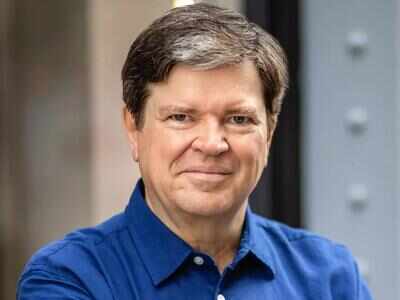
When students today hear the name Yann LeCun, it is often spoken in the same breath as modern artificial intelligence itself. As Vice President and Chief AI Scientist at Meta, he is celebrated as one of the founding fathers of deep learning. Yet, his journey is more than a series of breakthroughs in machine learning, it is a story of relentless curiosity, mentorship, and institution-building that spans decades and continents. For students navigating the world of AI, LeCun’s path is a masterclass in how dedication to research and teaching can ripple out to shape global technology. From early experiments with neural networks to creating platforms that define the future of AI, his career is a living lesson in blending theory, application, and vision.
Early academic roots: A postdoc in Geoff Hinton’s lab
LeCun’s defining academic journey began in 1987 at the University of Toronto, where he joined as a postdoctoral researcher under Geoff Hinton, a pioneer in neural networks. This period was formative: it merged mathematics, neuroscience, and engineering into a cohesive vision for AI. The lessons learned during that year would anchor his future contributions to both research and industry.
Research years at Bell Labs and AT&T
From 1988, LeCun embarked on an eight-year tenure at AT&T Bell Laboratories, one of the most prestigious research hubs of the era. Working on machine learning, neural networks, handwriting recognition, and optical character recognition, he navigated the delicate balance between applied challenges and fundamental theory. By 1996, he became Department Head at AT&T Labs Research, leading the Image Processing Research Department. Projects under his guidance explored pattern recognition, image compression, and video processing — all while collaborating with future AI luminaries like Yoshua Bengio and Vladimir Vapnik. This period cemented his reputation as a researcher who could bridge deep theory with real-world impact.
Transition to academia: Building NYU’s data science legacy
In 2003, LeCun shifted firmly into academia, joining New York University. Over the next two decades, he held multiple roles: Silver Professor of Computer Science, Professor of Neural Science, Professor of Electrical and Computer Engineering, and Professor of Data Science. His crowning achievement at NYU came in 2013, when he became the Founding Director of the Center for Data Science. Here, he established an institutional platform for interdisciplinary AI research, ensuring that generations of students could bridge theory and practice. His teaching spans machine learning, computer vision, robotics, computational neuroscience, and data-driven science — a blend of disciplines that reflects the holistic nature of modern AI.
Industry impact: Founding Facebook AI Research
While his academic reputation grew, LeCun also made waves in industry. In 2013, he became Director of AI Research at Facebook, launching Facebook AI Research (FAIR) with labs in Menlo Park, New York City, and Paris. Under his guidance, FAIR quickly became a global benchmark in computer vision, deep learning, and natural language processing. In 2018, he was named Vice President and Chief AI Scientist at Meta, a role he continues to hold. Today, he shapes AI strategy, oversees long-term R&D, and balances this with his professorship at NYU — a rare combination of industry leadership and academic influence.
Entrepreneurial ventures: Beyond academia and big tech
LeCun’s curiosity extends beyond research and teaching. He has co-founded ventures such as MuseAmi, a company developing AI-driven music and entertainment software, and continues to advise Element Inc., focused on biometric authentication. These ventures highlight his commitment to applying machine learning across diverse real-world domains.
Lessons from a life in AI
Yann LeCun’s journey is a reminder that innovation does not happen in isolation. From postdoc labs in Toronto to leading AI strategy at Meta, his career blends research, teaching, and entrepreneurship in a way that sets a standard for students and professionals alike. It underscores the importance of curiosity, interdisciplinary thinking, and building institutions that endure beyond individual achievements. For those stepping into AI or any field of study, the lesson is clear: Foundational knowledge, coupled with vision and perseverance, can shape not just a career — but the future of an entire discipline.TOI Education is on WhatsApp now. Follow us here.