

IISc, startup develop magnetic nanobots to treat tooth sensitivity | Bengaluru News
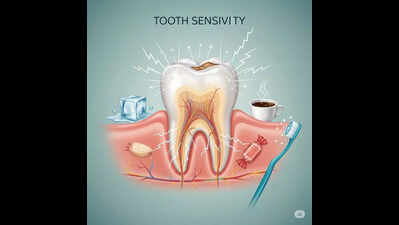
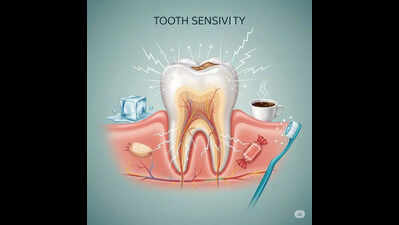
Bengaluru: For millions of people, the sudden, sharp pain of tooth due to sensitivity can turn a sip of cold water into a jolt. Now, researchers at Indian Institute of Science (IISc), in collaboration with Bengaluru-based deep-tech startup Theranautilus, have engineered “CalBots” – magnetic nanobots that can seal the problem at its source.As per IISc, CalBots are 400-nanometre particles loaded with a calcium silicate-based bioceramic formula, designed to travel 500 micrometres deep inside dentinal tubules, the tiny tunnels in the tooth that lead to nerve endings. Guided by an external magnetic field, the bots can then self-assemble into stable, cement-like plugs that recreate the tooth’s natural barrier. One application, the team said, can offer lasting relief.Dental hypersensitivity affects nearly one in four people worldwide and occurs when enamel erosion or gum recession exposes the dentine layer beneath, IISc said. The tubules in dentine act as direct pathways to the nerves, which is why even mild temperature changes can trigger pain. “We wanted a technology that solves a real problem in a way that no one’s attempted before,” said Shanmukh Peddi, postdoctoral researcher at IISc’s Centre for Nano Science and Engineering (CeNSE) and co-founder of Theranautilus.The team used a completely new class of bioceramic cement for the nanobots. While bioceramics are common in orthopaedics and dentistry, the formulation was designed specifically for hypersensitivity – to travel deeper and last longer.To test the approach, they worked first on extracted human teeth. “On these samples, we applied CalBots under a magnetic field for 20 minutes, during which the bots sealed the dentinal tubules by forming deep, stable plugs, a result confirmed through high-resolution imaging,” Peddi said.They then moved to animal trials. “Healthy mice drank both cold and room temperature water equally. But sensitive mice completely avoided cold water. After treatment, they started drinking it again. We saw 100% behavioural recovery. That was a big moment for us,” he said.The CalBots are made entirely from materials classified as ‘generally recognised as safe’ and passed toxicity tests in mice. “This is a compelling demonstration of what nanorobotics can achieve, and how they could significantly impact future healthcare,” said Ambarish Ghosh, professor at CeNSE and one of the study’s corresponding authors.Debayan Dasgupta, former PhD student at CeNSE and co-founder of Theranautilus, sees this as part of a bigger technological shift. “We’ve created a regenerative, active nanomaterial, a step towards the kind of ‘tiny mechanical surgeons’ Richard Feynman once envisioned,” he said.